
How Active Norcal builds, prices & packages 20 million social follows


Active NorCal, covering outdoor activities in Northern California, dropped its bi-monthly print magazine a few years ago to focus on building a massive online audience and all-digital revenue model. His innovative strategy grew 20 million social views.
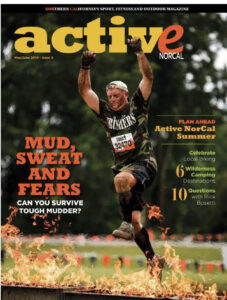
He now publishes a twice-annual print magazine with a one-time subscription rate of $30, but most revenues are from selling online and social audiences.
The journey began in 2014 when Zach O’Brien, based in Sacramento, used his background in PR with the NBA, inspiration from the Niche Media Conference (not owned by this magazine), and support from family and friends to found a magazine.
As a new publisher two years later, observing that magazine circulation was 10,000 every other month, the website traffic had 50,000 visitors; he could not get beyond the obvious facts.
“We were putting 99% of our effort into the print magazine but getting quadruple the unique visitors online.”
He thinks there is room for both today: A magazine published 2 times per year instead of 6, and a massive online audience.
Building a massive audience using social media
O’Brien, who runs the social media himself, shared the steps he took to build website traffic and create a social media powerhouse:

- Ramp up the posting schedule. Deliver content on a daily rather than monthly basis.
2. Post one content piece an hour and about 8 to ten pieces daily. The number of posts varied by the type of media used. For Instagram, there are only 3 to 5 posts; Facebook may average 12 posts, and X is a higher volume for article content.
3. Plan to post more during crises and other events that may go viral. “We learned two things that significantly impact readers: wildfires and weather. If there is a critical weather event or a wildfire, we’ll report heavily and run up to 25 social media posts daily”
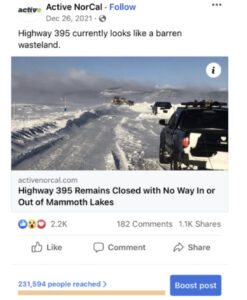
For example, a highway snow closure post received 182 comments, 1.1k shares, and 2.2 likes. One co-promote with Tahoe Blue Vodka during a historic snowfall reached 32.5 million people, peaking on December 27.
4. Include all new social media channels. In 2016, TicToc had not yet even launched; however, by implementing a strategy as each emerged, ActiveNorcal now has a presence on TicToc, Pinterest, Instagram, and LinkedIn, in addition to Facebook.
5. Audit algorithm changes for each social media, especially the recent preferences for images and video, by watching the trade news and adapting to new content formats.
The most important recent algorithm changes this year, he said, was the preference for images and video. Driven by competition from TicToc and Elon Musk’s changes to the X algorithm, other social media have followed suit.
Since TicToc’s vertical video format looks better on mobile devices, it has appealed to the younger audience. Today, Facebook has copied the design, creating “Reels” in 2023 and rewarding creators who posted in the new format.
“We followed the algorithm wherever it goes on every platform.”
O’Brien audits resulting traffic increases from adjusting posting formats, in this case, shifting from text to pictures, videos, and Reel-style formats. So far, moving to visual posts resulted in significant gains of 3 to 4x the audience for each post.
6. Use fun headlines and imagery that are Facebook-worthy
7. Use tools such as Canva to build visual posts quickly, plus Unsplash Creative Commons photos.
8. Hack Facebook’s “stories” section to share articles, post promotions that capture emails, and link the story in the comment section if an image goes viral.
9. Input story links into the company bio on Instagram. Placing “find the link to read more” in the caption is a workaround that gets traffic from Instagram, which does not typically allow linking.
10. Use paid social posts to grow the email list. Some paid social campaigns require email sign-up to see more content. By articulating that the viewer agrees to receive emails from the newspaper and the client, these paid posts also help grow ActiveNorcal’s email audience.
Today, ActiveNorcal boasts 705,000 unique visitors, up from 50,000, with 1.5 million monthly page views and millions of social media impressions.

The social reach on Facebook totals 20 to 30 million per month.
The technology includes Canva to build visual posts, Artgrid for royalty-free music, and Unsplash for Creative Commons photos.
Recently, he posted on LinkedIn that Opus AI would “change his. The tool cuts long videos into short Instagrammable reels, editing out the “hums” and focusing on the most exciting content points.
However, after the social audiences and website traffic exploded, the next challenge was selling a suite of all-digital advertising products.
First, O’Brien and his team selected a core suite of advertising products to sell:
- Banner ads on the website
- Ads in the newsletter
- Branded content
- Exclusive newsletters
- Paid social media promotions and co-promotions
- Podcast advertising
Next, they packaged the products
Depending on the ad location, the base level CPM runs about $20 to $30. Interstitial banner ads are sold at a premium of $40 CPM, and monthly buys for any position range from $300 to $500. Branded content is $500 if the advertiser uses ActiveNorcal’s writers or $300 if submitted by the advertiser.
The team sells three core bundles customized to the customers’ needs. “Each business has its preferred model,” O’Brien said.
The “Epic Package,” for example, sells for $1,500. The website shows that it includes:
- A leaderboard and 300×250 banner with 25k impressions each
- One website take-over
- Two branded content articles
- Two social media promotions
- Four ads in NorCal Beat, the newsletter
- Pop-up interstitials
The slightly reduced Ultimate Active and Content Partnership packages are $750 and $500, respectively.
“We throw it all in,” O’Brien said. The value proposition is “To reach everyone, be everywhere.”
 O’Brien has also secured a contract to run the social media for AIN and is building a LinkedIn Strategy for the B2B magazine.
The caveat, however, O’Brien said is that digital advertising was harder to explain to small business clients and more time-consuming to produce.
So, for advertisers who “just want to buy a page,” he brought back the magazine twice a year. Starting in January and May 2024, with a one-time subscription charge of $30. A note on his website explains:
After heavy demand for the past 8 years, we have decided to revive the magazine for subscription only. The big, beautiful photos and insightful articles will only be found in our bi-annual magazine – never online. As the subscriber base grows, we will continue to invest in the product, bringing you the best guides for adventure in NorCal.


