
Two niche publishers selling memberships and courses


For some niches, e-books and webinars are designed to capture an email or sell sponsorships.
But this is not always the case. A few creative media have launched new revenue streams and supported higher premium subscriptions using this model.
This is most likely to be true for niches such as those in:
- Professions that require certifications and/or continuous education, such as insurance and real estate.
- Categories whose mission contains “how to” do it
We found two super-starts in both the B2C and B2B categories: The Taunton Press, which publishes several niche consumer brands that include woodworking, home building, sewing, crafts, and gardening, and Wells Media, which has three B2B magazines aimed at the insurance industry.
The Taunton Press is a family-owned business, founded by Jan and Paul Roman in 1975 in Newton, Connecticut, with categories that lend themselves to “how to do it” B2C information.
They took a crawl, walk, run approach to expanding the franchise into books. Paul Roman was a woodworker, so Fine Woodworking was not only the first title but also the subject for the first books. They used their contacts with experts in the industry, including their own writers.

Fine Homebuilding, gave rise to The Not So Big House, by architect Sarah Susanki, published in 1998 as “an early voice to the tiny house movement.” Mater carpenter Larry Haun (1931-2011), a former contributing editor to Fine Homebuilding, wrote The Very Efficient Carpenter, published in 1992.
As the titles expanded to five, so did book publishing.
A few decades later, The Taunton Press has 600 books in the archive, with new books and updates every year, and a full-time manager of its books division.
Moving into video courses
Eventually, Haun, the author of the book on carpentry, included companion videos on how to frame a house. The videos evolved into online workshops, which were saved as evergreen content.
 Today, FineWoodworking promotes its workshops throughout its website and uses them to promote its premium membership package.
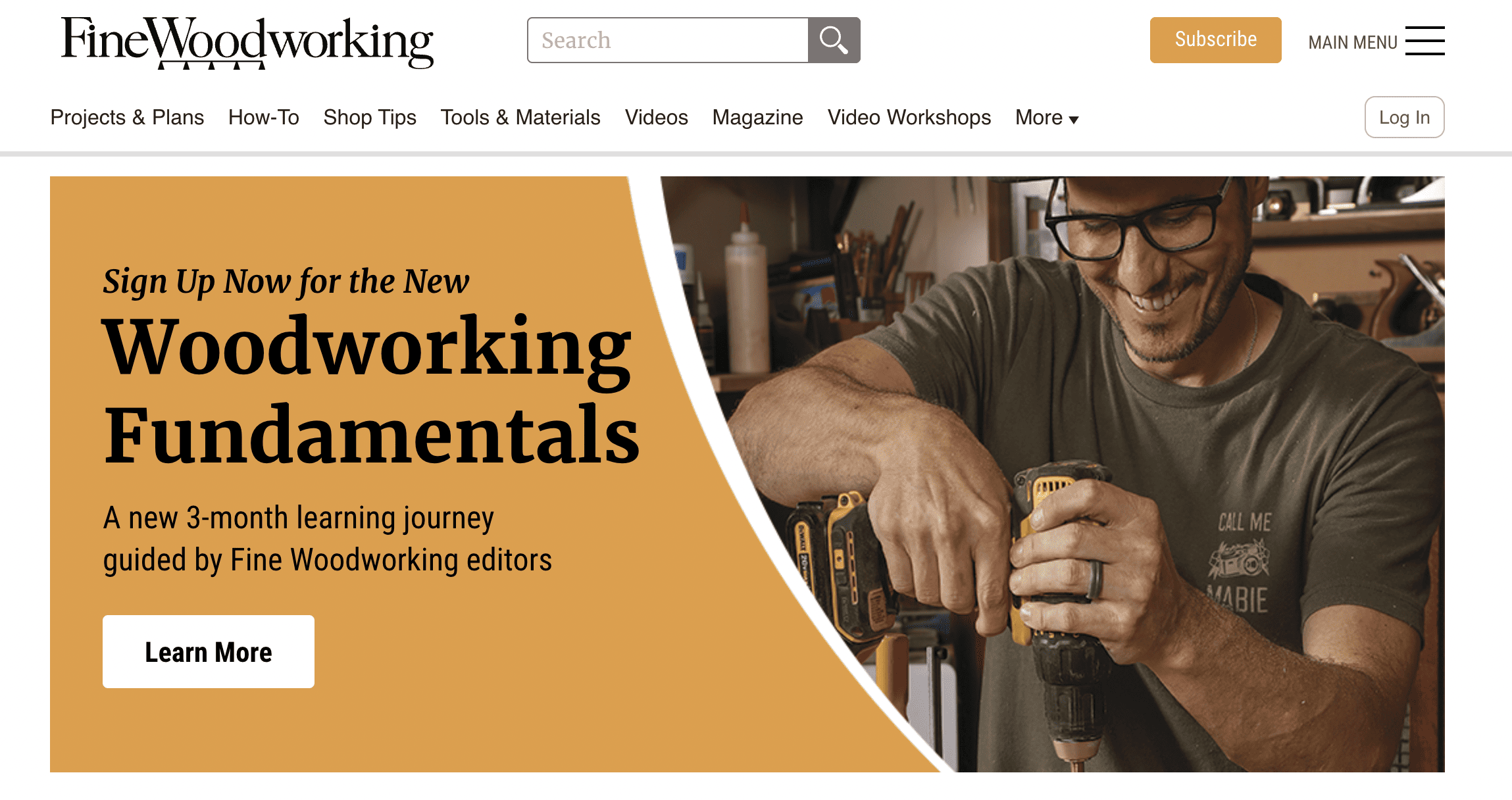
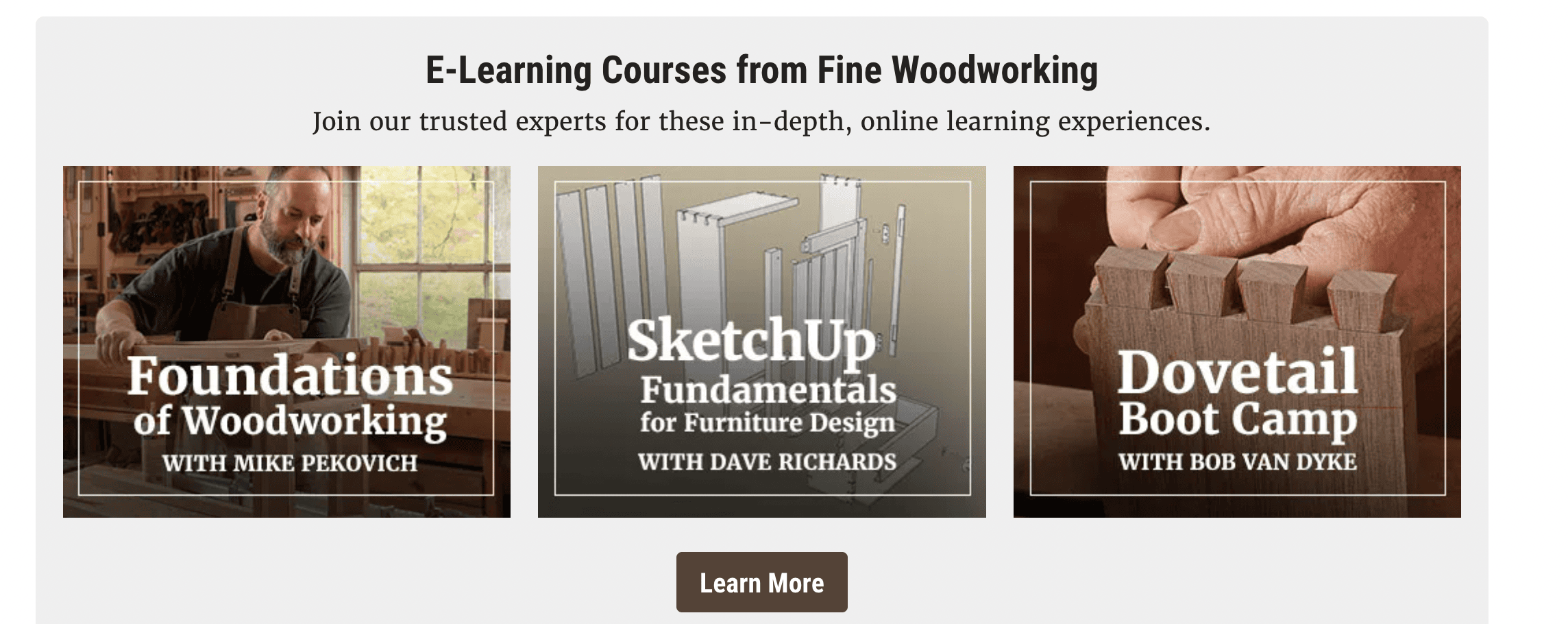
The landing page does a great job of selling specific courses, but the model leads to the premium subscription page.
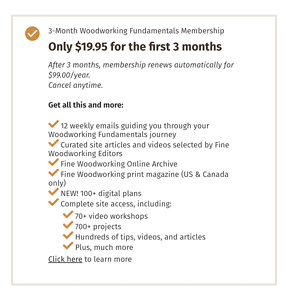 An offer of $19.95 for the first three months includes 12 emails, guiding the user through Woodworking Fundamentals, curated articles to use in the course, the FineWoodworking archive, the magazine, 100 digital plans, 70 videos, and 200 projects for $19.95 for the first three months.
A couple of decades of content production for the first title in their magazine group goes into the plan!
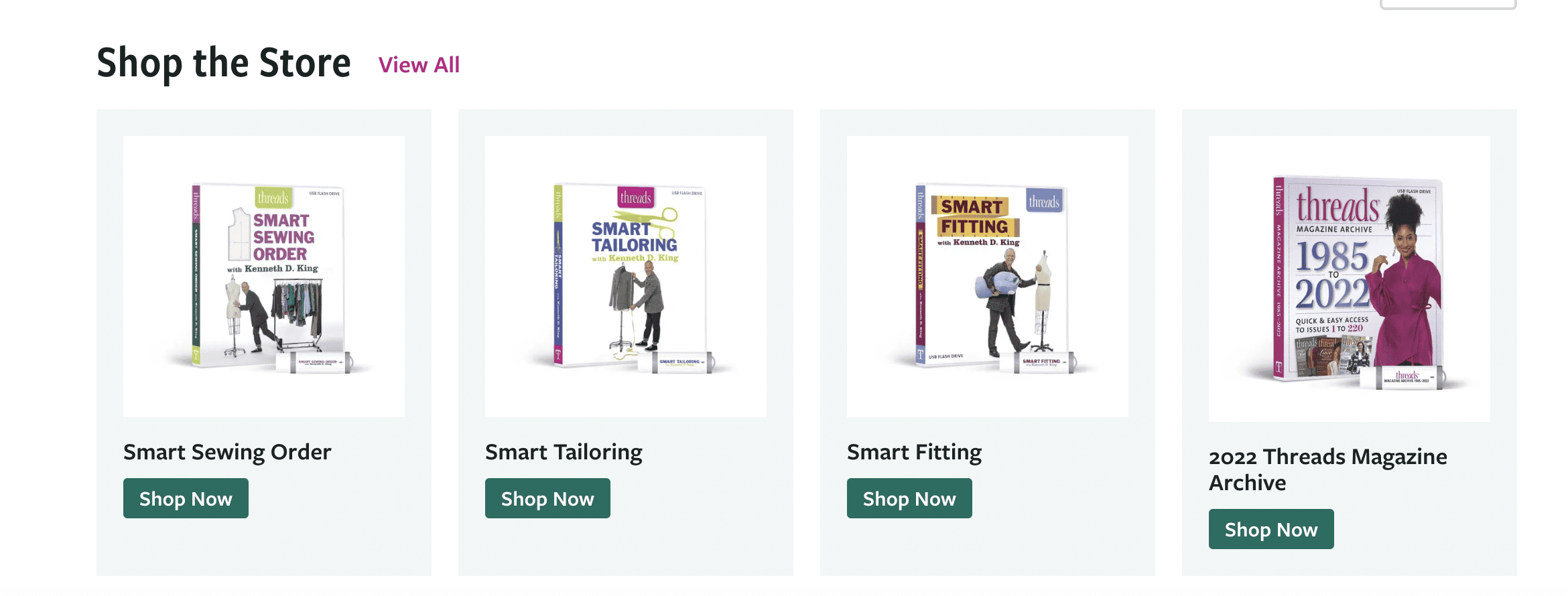
Threads Magazine, launched in 1985, has a different model for its courses.
It also now sells subscriptions for $59 a year, as the “premier information and archival resource for garment-sewing techniques and fitting expertise.”
It also started by selling books online in 1993, including Couture Sewing Techniques by Claire Shaeffer.
They produced the first e-learning course on DVDs, a series called “Teach Yourself to Sew,” starring Judith Neukam, again, a former executive editor and now a contributing editor at Threads.

Today, the media shows short videos on the website – such as “caring for wool” that start with an ad for 20% off the more complete courses, which are created on Kajabi and sell for around $69.
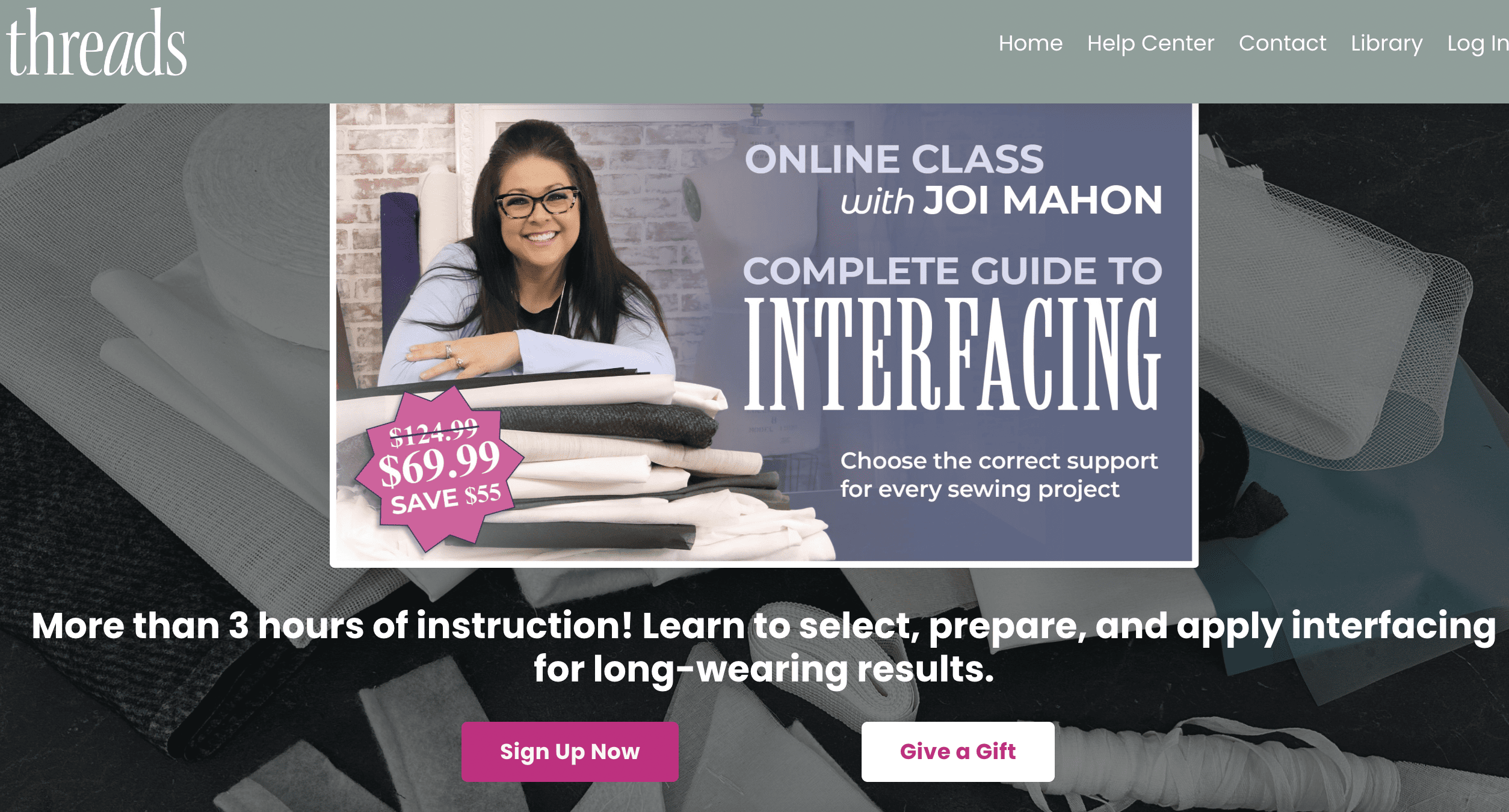
One challenge in holding courses is how to compensate an expert who already has their own social channels, following, and revenue stream if an editor does not have the skill set to teach. One option is to split revenues from per-course payments while allowing the archive to be included in premium subscriptions at a later date.
B2B Courses
The employee-owned Wells Media publishes three magazines for the Insurance industry, and also offers a full suite of courses, under a sister brand, The Academy of Insurance.
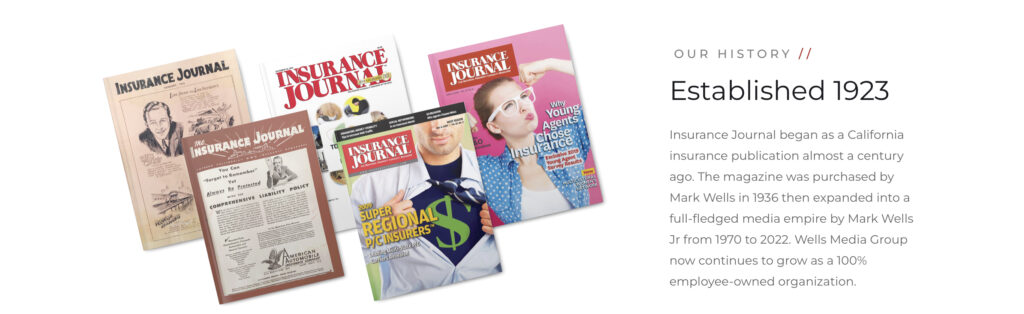
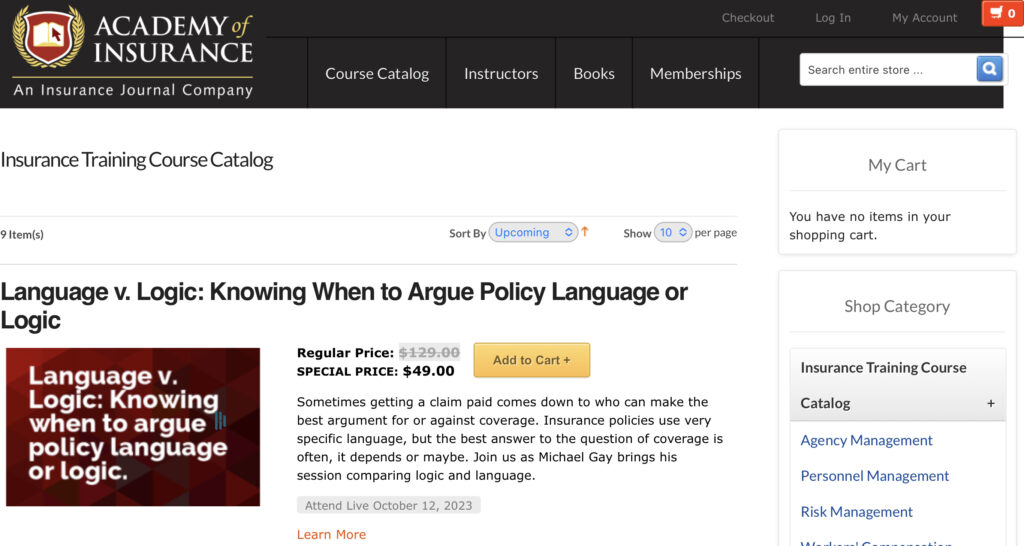
WellsMedia sells one-off courses in the $49 to $69 range and also uses courses to support premium membership, and all access to 200 online insurance-related courses in the Insurance Academy is built-in to a $279 annual membership.
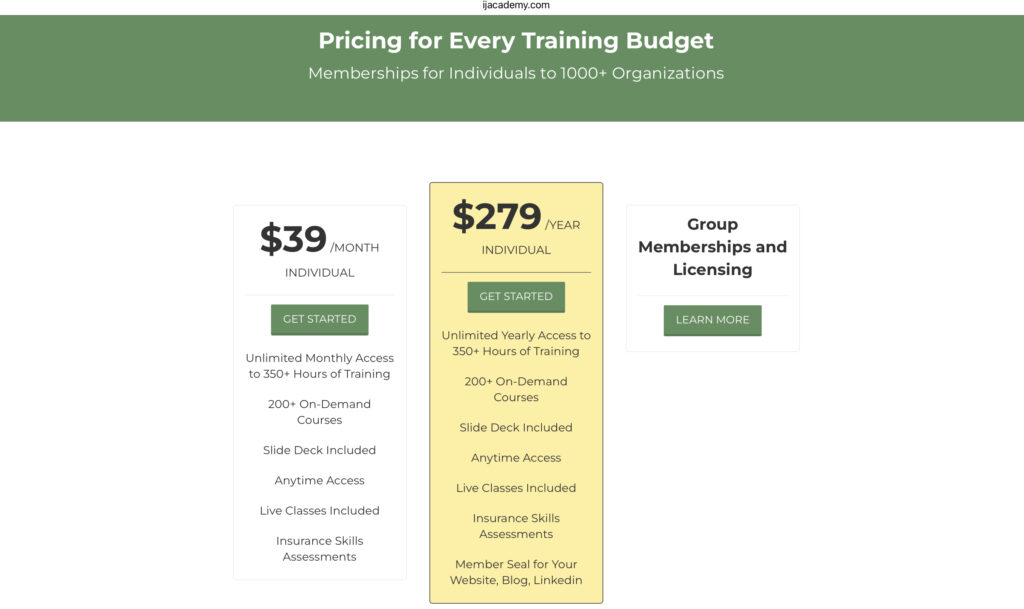
Both live and on-demand classes are included, and a “member seal” can be added to websites, blogs, and LinkedIn, adding value.
Where to find authors and instructors
If you have done an excellent job of attracting experts who write – see also how to groom experts into writers with a Q&A column -as freelancers, they can often partner on a book.
Finding instructors is more complicated; however, people with a passion for the industry are out there, and your network may know a few. We think there may also be experts posting content on YouTube and TickToc virtually for free, with following too small to create a revenue stream. Look for people with a charismatic presence but only a few hundred followers. For more established niche publishers, influencers selling consultancy services or subscriptions can also provide a partnership.
These contacts are valuable in any case, so keep them close.


